
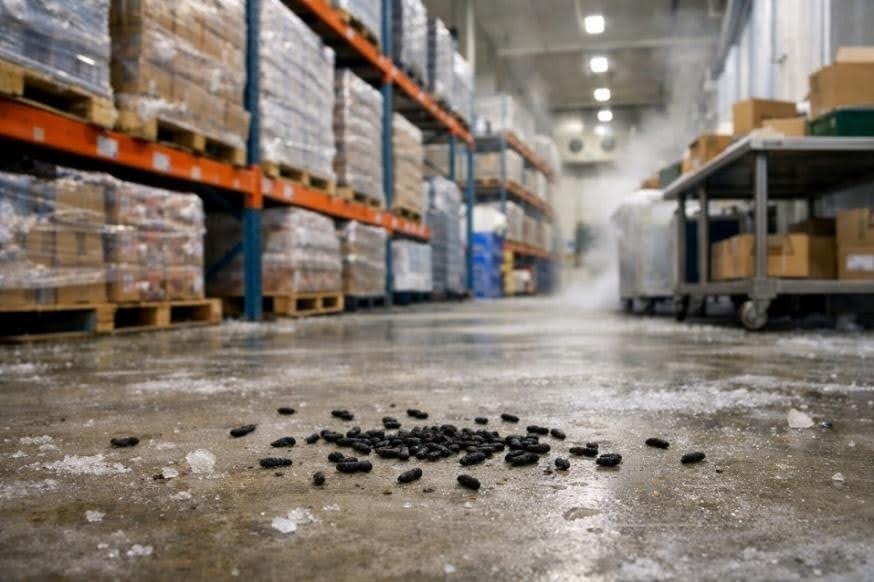
A frozen food manufacturing company reported persistent rodent activity within its warehouse, with rodent droppings frequently discovered on the ground floor storage area and around the second-floor loading lift. These findings indicated active rodent movement between storage and loading areas, posing a significant risk to food safety, product quality, and regulatory compliance.
Warehouse Rodent Control Solution
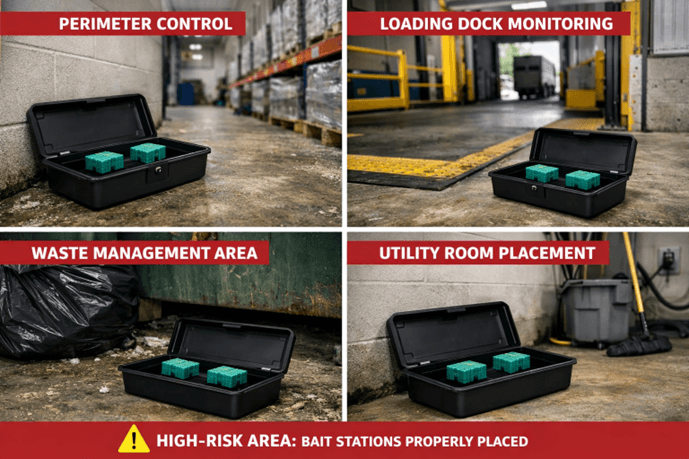
Following a comprehensive site inspection, our team identified the likely rodent movement routes and rodent harbourage areas. Open tray bait stations were strategically deployed along external wall perimeter, loading entrances, storage racks, and at the loading lift, where rodent activity was most evident. Additional bait stations were installed at other high-risk areas, including the maintenance office, waste treatment plant, refuse collection area, utility room, and the warehouse perimeter. These locations were selected because they provide rodents with easy access to food sources, water, shelter, and established travel routes, making them more susceptible to rodent infestation.
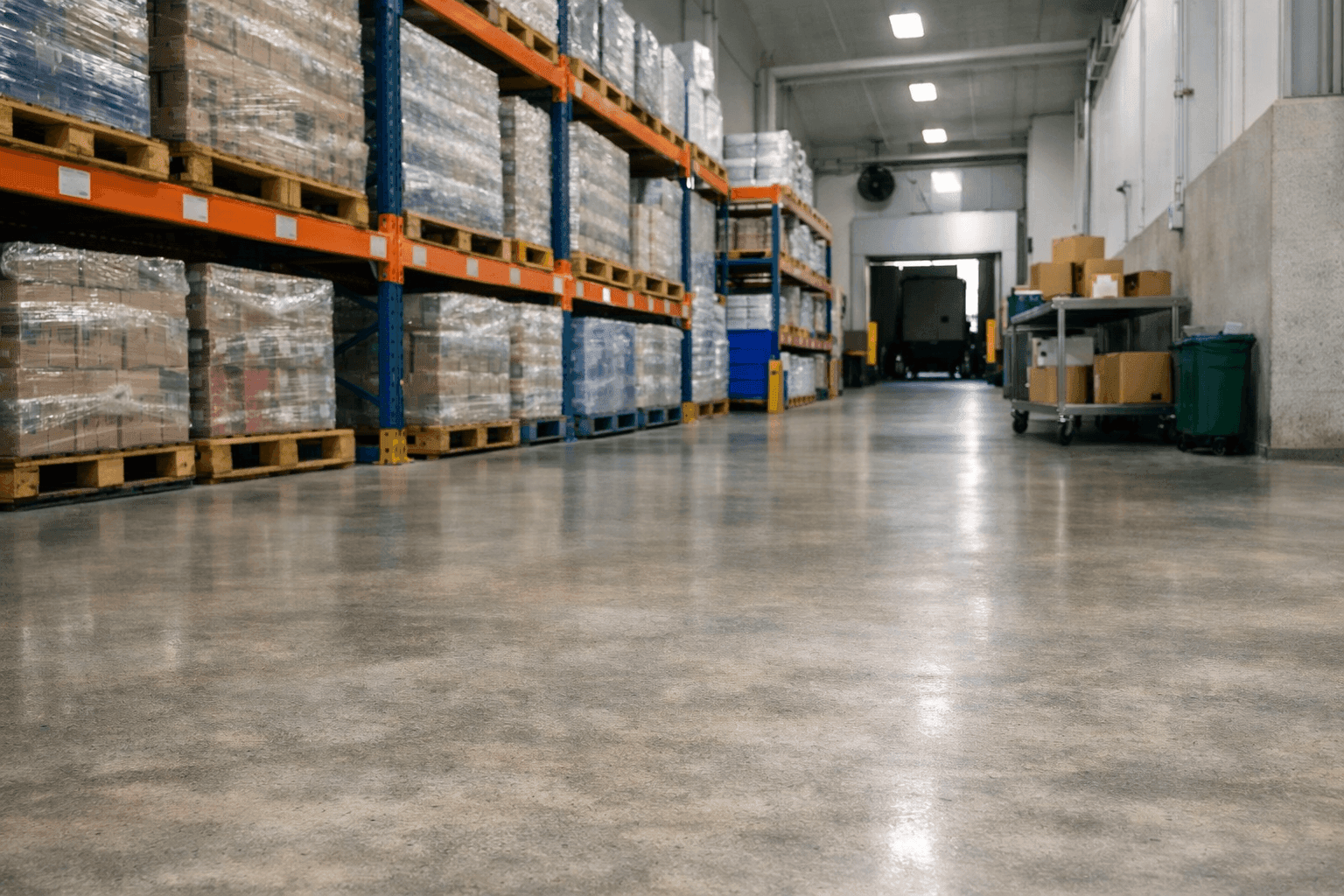
Routine inspections were conducted to monitor bait consumption, assess the effectiveness of the treatment, and identify any new signs of rodent activity. Over the following three weeks, bait uptake gradually decreased, and no further rodent droppings or sightings were observed during subsequent inspections. The successful reduction in activity confirmed that the rodent infestation had been effectively eliminated.
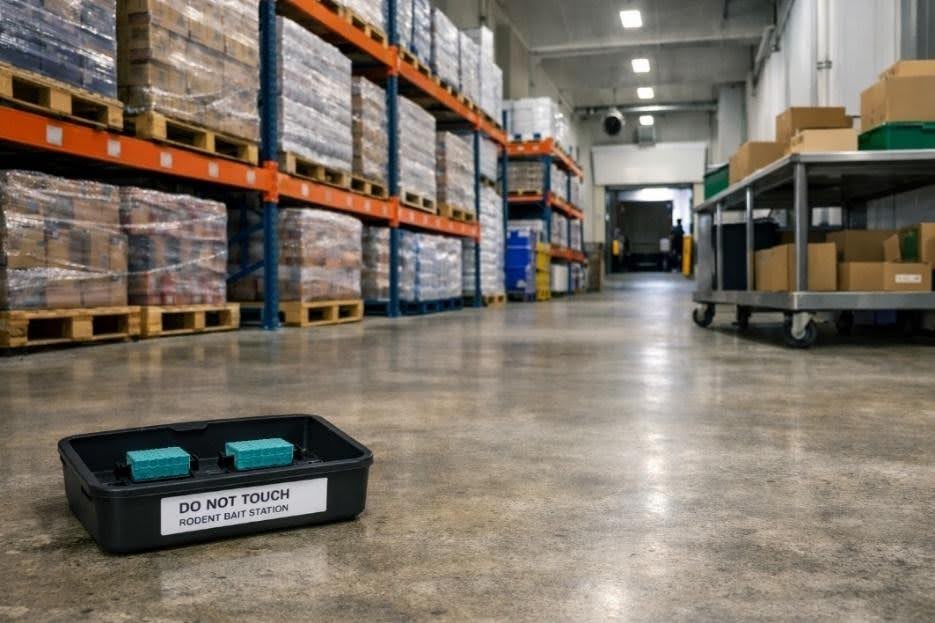
Routine inspections were conducted to monitor bait consumption, assess the effectiveness of the treatment, and identify any new signs of rodent activity. Over the following three weeks, bait uptake gradually decreased, and no further rodent droppings or sightings were observed during subsequent inspections. The successful reduction in activity confirmed that the rodent infestation had been effectively eliminated.


