
The client reported concerns regarding fly activity and potential pest contamination risks at several key transition points between raw material storage and production areas. These entry points are critical zones where flies and other pests may enter the facility and potentially affect hygiene control within the production environment.

Fly Contamination Risk Control
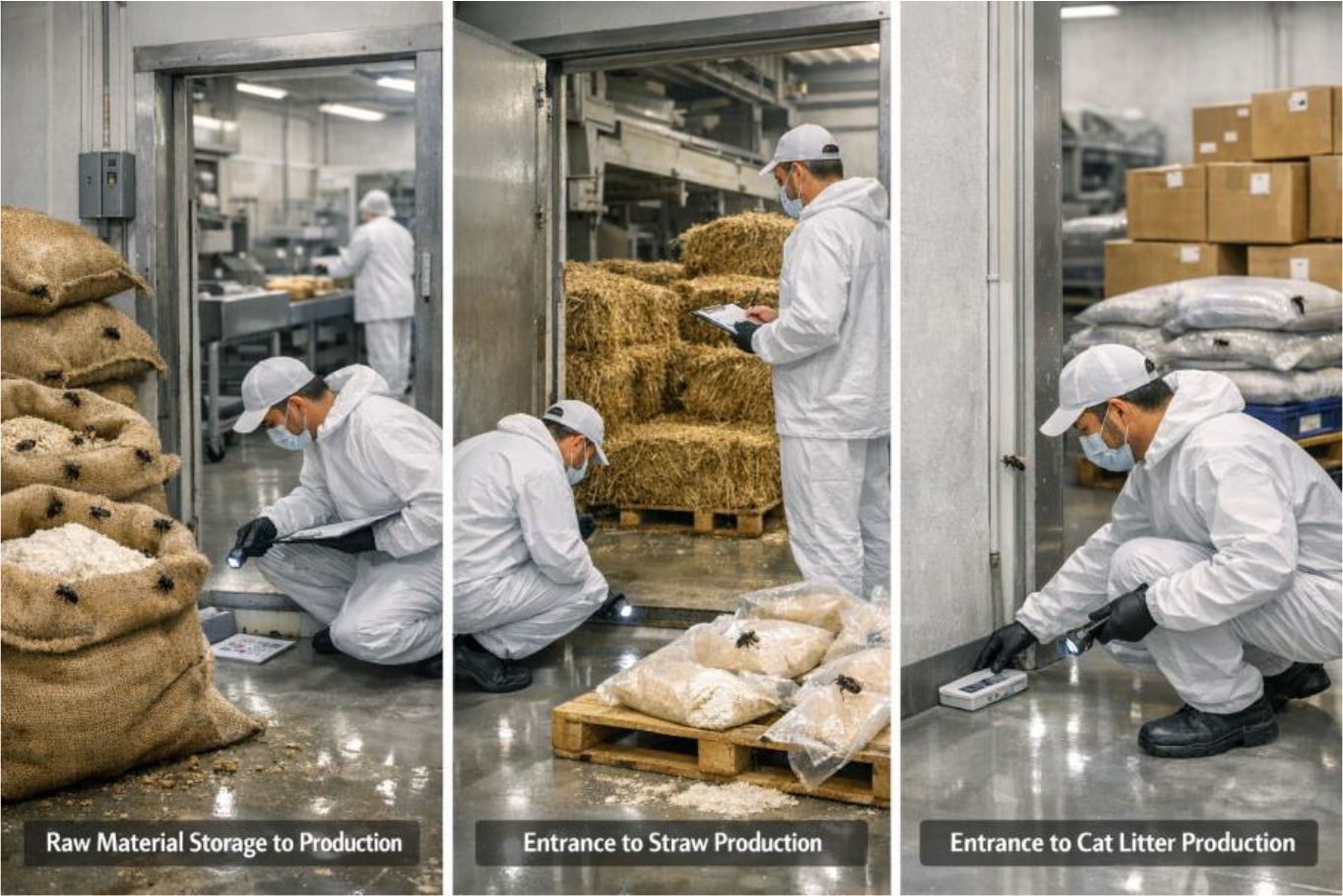
During the site inspection, technicians conducted monitoring at several locations, including the raw material storage to production entrance, entrance towards straw production, and entrance towards cat litter production. Observations revealed signs of pest presence, including small flies, large flies, lizards, shoe prints, and bird fur, indicating possible pest entry points and fly activity around these areas.
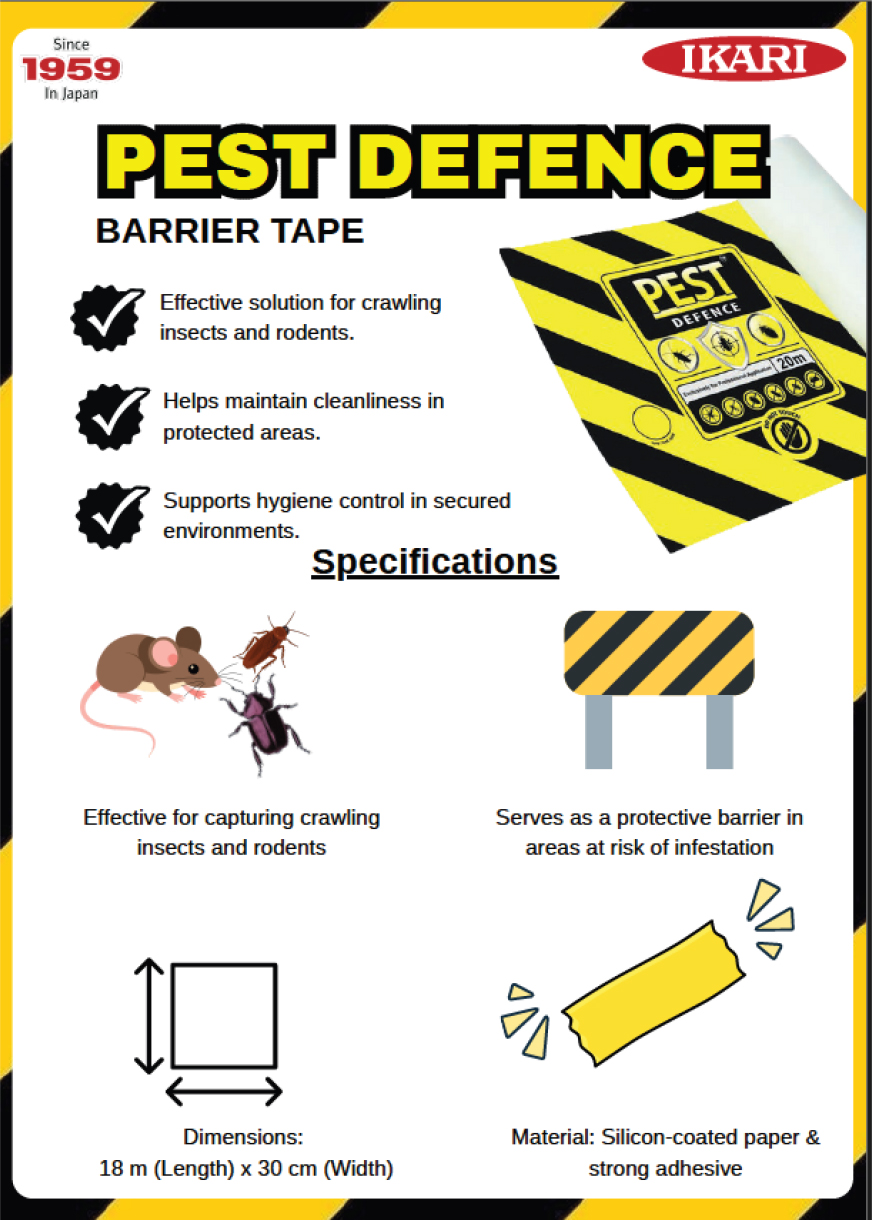
To address the issue, pheromone lure and bait stations were strategically placed at identified hotspots to enhance fly monitoring and pest detection. These monitoring tools were deployed to track fly activity levels and identify areas with the highest risk of fly entry into the production facility.
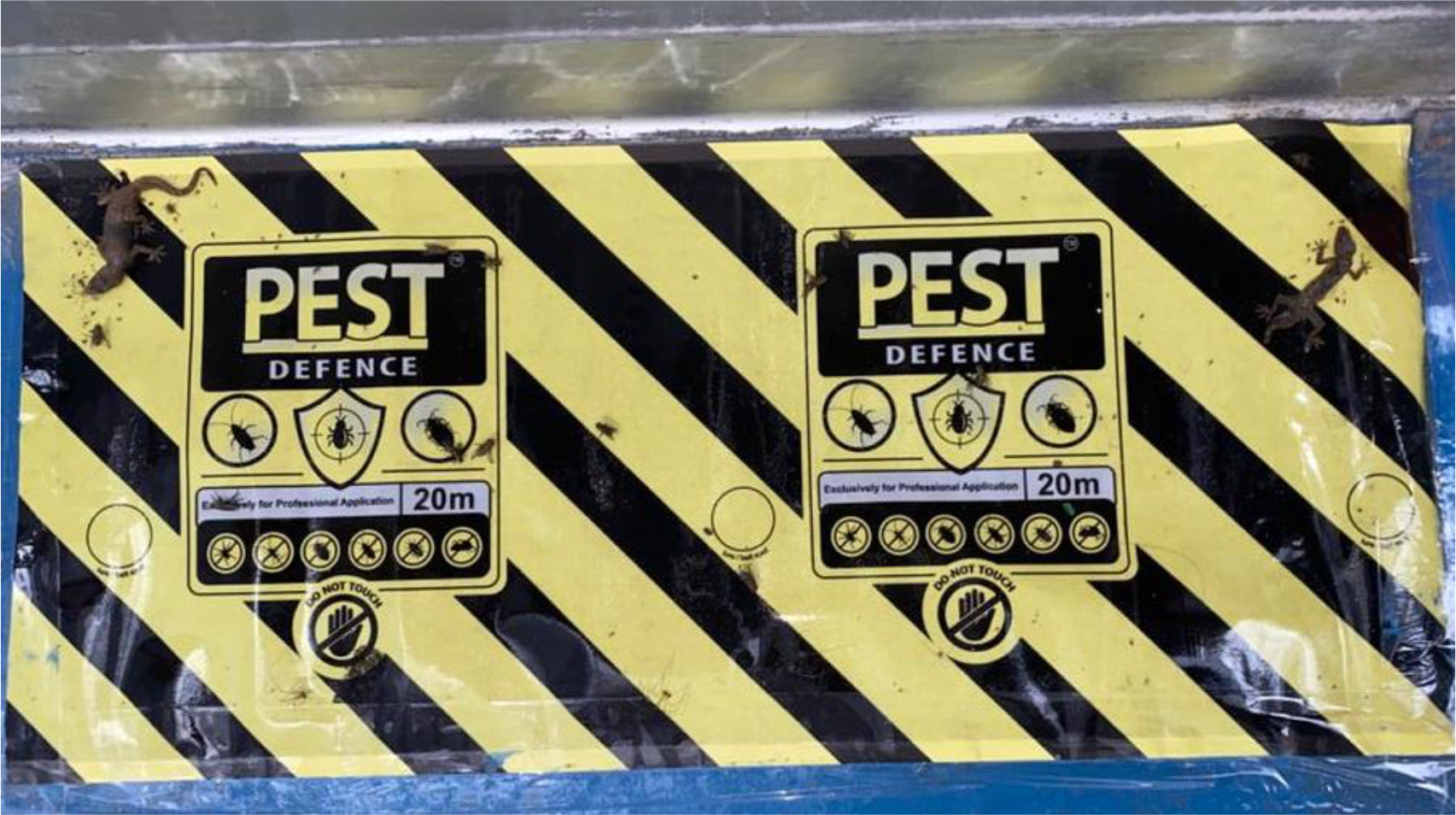
After 6 days of monitoring, the traps successfully captured and confirmed fly activity at several locations. The collected monitoring data allowed technicians to identify the most active fly hotspots, enabling the implementation of targeted fly control measures to reduce pest risks around the production entrance areas.
This case demonstrates the importance of proper fly monitoring, pest detection systems, and preventive pest control strategies in identifying fly activity hotspots and preventing pest contamination risks in sensitive manufacturing environments.


